

In the ever-evolving landscape of business, a profound paradox is unfolding. The rapid rise of Artificial Intelligence, a force once feared for its potential to dehumanize the workplace, is now presenting us with an unprecedented opportunity to do the opposite. It’s a chance to strip away the mundane, the repetitive, and the bureaucratic, and in their place, elevate the very essence of what it means to be a leader: to be human.
This is not a theoretical exercise. This is the new reality. For years, as a leader, I've seen firsthand how outdated structures and a misplaced focus on endless tasks can stifle creativity and drain the soul of a team. It's a fundamental mindset flaw—the belief that you can squeeze innovative people into a cage and expect them to shine.
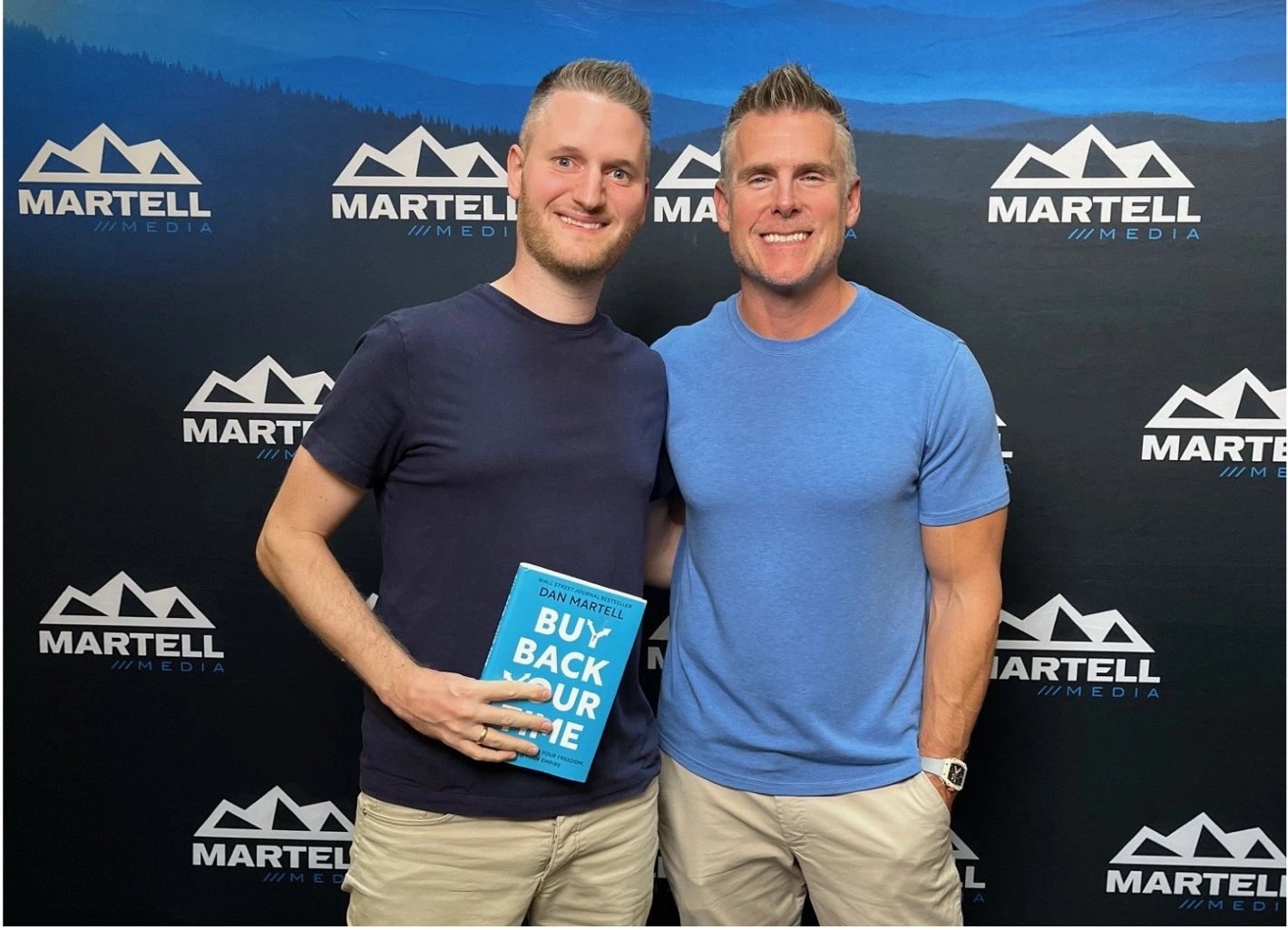
My recent experience at the AI Adoption Summit, hosted by the visionary Dan Martell, reinforced a truth that I've been cultivating for years: AI is not a replacement for human leadership; it is an enabler of it. It is the tool that allows us to reclaim our time and refocus our energy on the things that truly matter—nurturing culture, fostering innovation, and building a foundation of trust. This article, a culmination of my professional journey, insights from the summit, and the timeless wisdom of mentors like Adam Grant, Simon Sinek, Andrew Huberman, and Vin Giang, is a blueprint for the future of leadership. It’s a future where we leverage technology to unlock our full human potential.
The three core areas where modern leaders, in collaboration with AI, hold a genuine lever for growth are:
- Reclaiming Time: The Strategic Automation of Administrative Burden
- Unlocking Potential: The Empathetic Analysis of Individual Needs
- Elevating Human Connection: The Creation of a Culture of Trust
The traditional leadership role has long been burdened by an immense weight of administrative tasks. From scheduling meetings and writing reports to sorting through endless emails, leaders often find themselves drowning in a sea of non-strategic work. This busyness is often mistaken for productivity, but as Dan Martell succinctly puts it, "Systems scale, people don't". True leadership is not about managing tasks; it is about inspiring people and building systems that allow them to thrive.
The AI Adoption Summit highlighted the critical shift in mindset required to leverage AI effectively. It's an "AI first" approach. Every problem is no longer just a problem; it's an opportunity to ask, "How can AI solve this for me?" This mindset allows leaders to move from being reactive problem-solvers to strategic visionaries. The key is to use AI to automate repetitive tasks and processes, freeing up valuable time for more creative and meaningful work.
For example, a leader can use AI to:
- Automate meeting summaries and action items: Tools can listen to a meeting and automatically transcribe key decisions, next steps, and assignees, eliminating the need for a leader to spend hours on this task.
- Draft routine emails and communications: AI can analyze past communication styles and draft responses to common inquiries, from internal announcements to external partner updates.
- Manage data and analytics: Instead of manually compiling reports, leaders can use AI-powered dashboards to gain instant insights into team performance, project statuses, and key metrics.
This strategic automation is not about making the leader redundant. On the contrary, it is about making their time more significant. By offloading the administrative "to-do's," leaders can dedicate their energy to what only they can do: provide mentorship, foster psychological safety, and build genuine relationships with their team members. It’s an investment in significance over urgency, as Dan Martell would say.
Andrew Huberman’s work on productivity and focus provides a perfect scientific framework for this approach. He emphasizes the power of "ultradian rhythms"—90-minute focused work sessions followed by short breaks. By using AI to handle the "push-system" of tasks (work that gets pushed onto you), leaders can implement a "pull-based system", where they choose the few, significant items to focus on in their deep work sessions. This prevents brain fatigue and allows for truly meaningful cognitive effort.
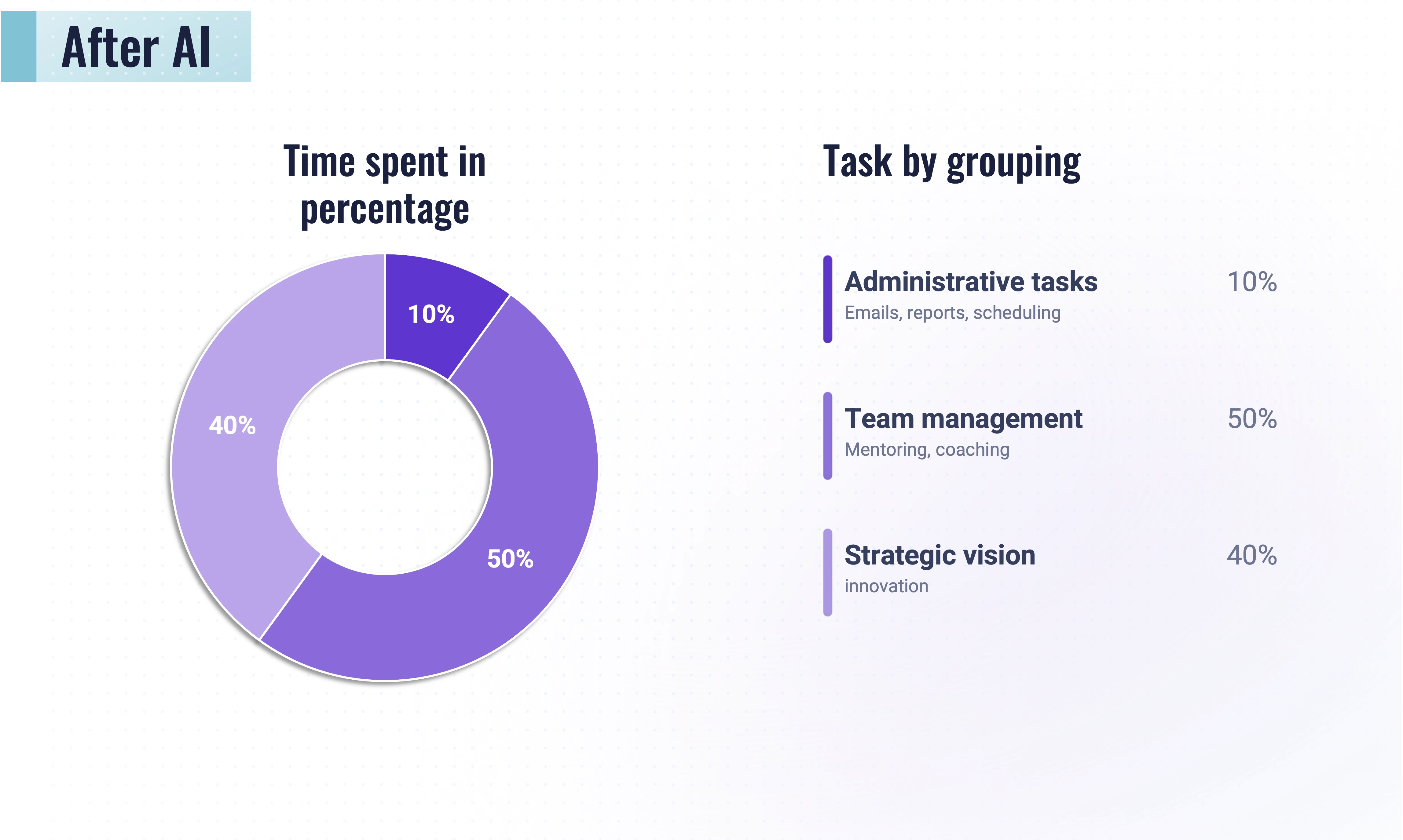
Chart 1: The Shift in a Leader’s Time Allocation

- Unlocking Potential: The Empathetic Analysis of Individual Needs
Leadership is no longer a one-size-fits-all model. It is about understanding the unique strengths, weaknesses, and motivators of each individual. As a leader, I've always believed in the concept of the "Informed Captain," where team members are empowered to make independent decisions within a clearly defined framework. This concept, inspired by the Netflix culture of decentralized decision-making, requires leaders to trust their people.
AI supercharges this principle by providing an empathetic layer of data. While it can’t replace a conversation, it can provide insights that make a conversation infinitely more productive. Consider these applications:
- Performance and Development: AI tools can analyze project management or operations data from plattforms like Jira or GitHub to identify patterns in how individuals work best. They can spot when someone is overwhelmed and needs support, or when they are ready for a new challenge. This can be coaching to organize the calender like badging the same kind of workloads together to reduce change of context for example. This allows a leader to proactively address needs rather than reacting to burnout.
- Feedback and Communication: AI can analyze communication patterns within a team, identifying who is being heard and who is not. This can help a leader to ensure that every voice is given a space to speak and that dialogue isn't stifled by power dynamics. This is a crucial step towards building the psychological safety that Adam Grant champions.
This data-driven empathy is a form of “unlearning,” a core tenet of Adam Grant’s philosophy. Leaders must unlearn the old belief that they can know everything just by "reading the room." Instead, they can use AI to provide objective, data-backed insights that help them ask better questions, be more grounded in reality, and make more informed decisions about their team's well-being. Grant believes that intelligence is not just the capacity to think and learn, but the ability to "rethink and unlearn". AI provides the data to fuel this rethinking process.
Furthermore, Vin Giang’s work on communication reminds us that true influence comes from understanding how to shift what people think, feel, and believe. By using AI to analyze team sentiment and behavioral patterns, a leader can gain a deeper understanding of their team's emotional landscape. This allows them to "hold space" for their team members, to listen more than they speak, and to provide the support that is truly needed.
Chart 2: The Informed Captain Concept
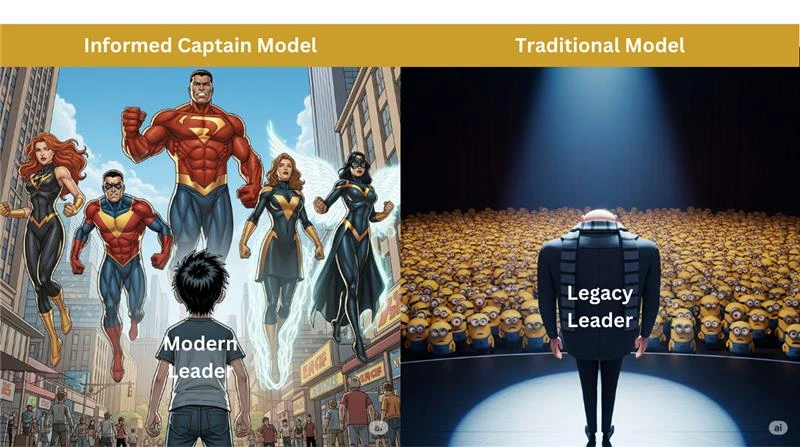
- Traditional Model: A single captain (leader) at the helm, making all decisions. The rest of the crew follows orders.
- Informed Captain Model: The leader is on the bridge, but multiple "captains" (team members) are at their own stations, each with the authority to make decisions for their area. The leader provides the overall mission and framework.
At the heart of the most successful organizations is a strong, vibrant culture built on trust and shared values. As I reflected on the transition from the high-energy AI Summit to our company's summer party, it became clear that the true measure of success isn't just the numbers we hit, but the people and the culture that get us there. AI, far from being a distraction, is a tool that allows us to focus on this culture.
Simon Sinek's "Infinite Game" philosophy provides the perfect lens for this. He argues that leaders with a finite mindset focus on being "number one," chasing metrics and quarterly figures. In contrast, leaders with an infinite mindset focus on building a business that lasts forever by putting human beings at the center of their strategy. AI, by automating the finite tasks, gives leaders the bandwidth to play the infinite game. It allows them to focus on the "why"—the purpose that inspires employees and generates loyalty.
By freeing up time, leaders can:
- Build Trusting Teams: They can spend more time in genuine conversations, walking the floor, and engaging with their people face-to-face instead of staring at a screen all day.
- Foster Openness and Feedback: They can create an environment where employees feel safe to share their ideas and even challenge the status quo without fear of retribution. This is what I call creating a workplace where people feel free to shine, not to be caged.
- Celebrate the Human Element: When a team successfully implements an AI solution or keeps the machine successful operating the leader can celebrate not just the efficiency gains, but the human ingenuity and collaboration that made it possible. Because of the near limitless data the leader can analyze in seconds, the celebration does not depend on only obvious successes like completed projects. Think of an Engineering Team which make sure that the platform has no failures without violating any SLAs over a long time period.
The core of this is communication. Vin Giang, a master of communication, emphasizes that the quality of your life is determined by the quality of your communication. By leveraging AI to manage the transactional aspects of communication, leaders can focus on the transformative. They can master the art of storytelling, using their own journey and personal anecdotes to connect with their team on a deeper level.
Chart 3: The "Infinite Game" of Leadership
 Conclusion: A New Blueprint for the Human Leader
The age of AI is not about replacing the human element in leadership. It is about restoring it. For too long, leaders have been bogged down by tasks that can and should be automated. The true value of a leader lies not in their ability to manage checklists and processes, but in their capacity to inspire, to mentor, and to connect with their team on a fundamental human level.
By adopting an "AI first" mindset, we can strategically automate administrative burdens, use data-driven insights to better understand our teams, and reclaim the time and energy needed to build a culture of trust and human connection. This is the silent revolution. It's a journey from the cage of outdated structures to a future where innovation and humanity shine brighter than ever before.
This is the new blueprint for the human leader. It’s a call to action. It’s a call to embrace technology, not as a threat, but as our most powerful ally in the pursuit of a more empathetic, more productive, and more human-centered business world.
Because after all, there are three leadership-skills, AI will never be able to copy: Taste, Vision and Care.
What specific aspect of your leadership journey do you want to elevate with an AI-first approach?